
How I Lost My Own Game to My Mom.
Case study on how I, as a one person team, created a board game with AR experience.
UX/UI & Motion Designer
February 2025
After Effects, Zappar
The Process
Click a tile to jump to that section.
Overview
"Almost Humans" is a two-player strategic card game where characters come to life through AR animations triggered by scanning QR codes on their cards.
"Almost Humans" is the practical part of my bachelor's thesis, created during my studies in New Media Arts with a specialization in Animation and Special Effects. I handled the entire process - from concept, figuring out the game mechanics and testing, to design, animation and AR implementation.
Figuring Out Mechanics
This section is for card game nerds! It explores my struggles through figuring out different game mechanics and game instructions - if you don't have time, you can skip straight to the Final Card Designs section ↓
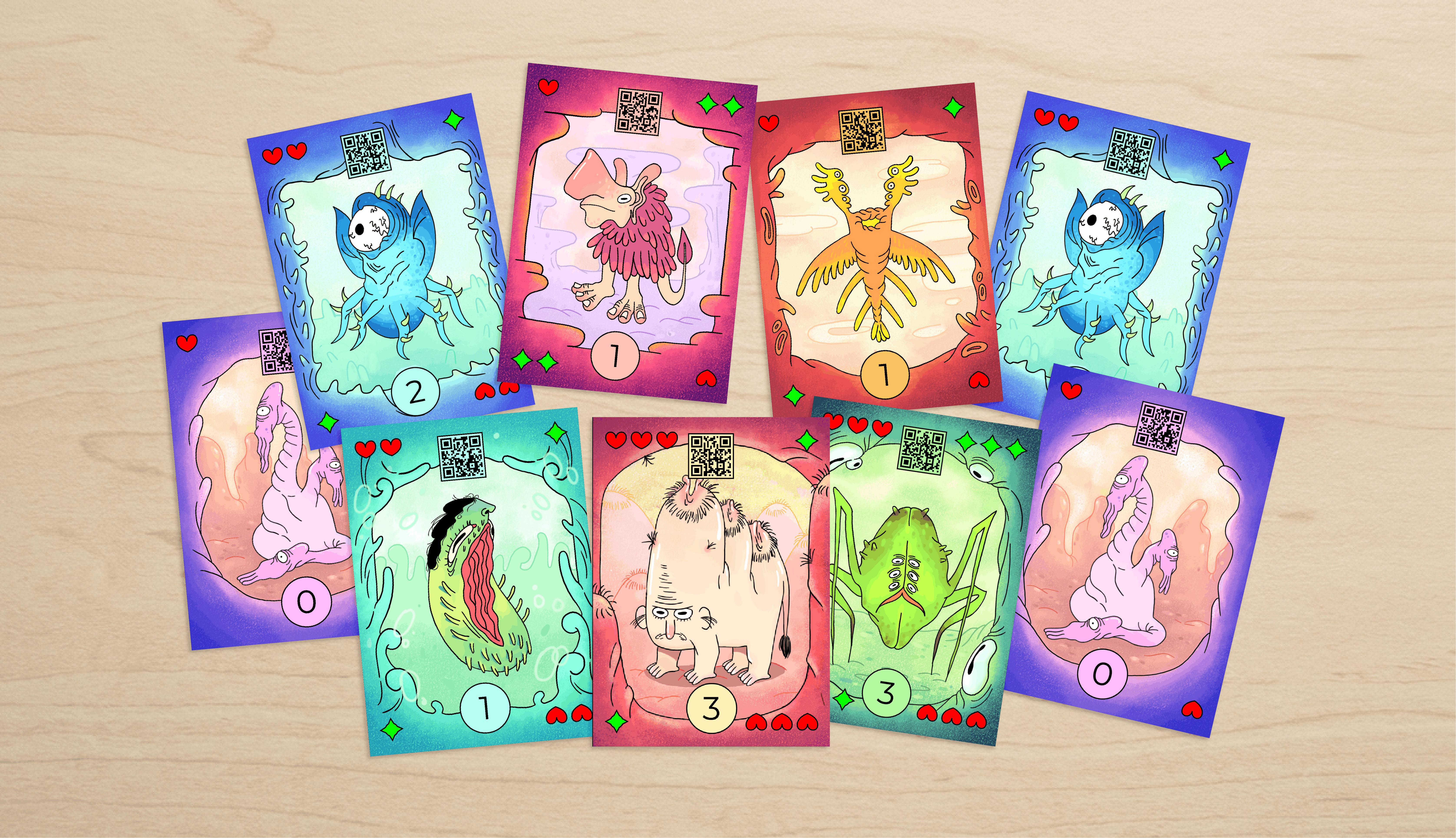
Cards mockup
Designing the mechanics turned out to be one of the most challenging - and most rewarding - parts of the project. I started with a simple card game based on health and attack values. The game began with each player drawing five cards and battling against each other. Sounds pretty basic… and boring. So I added a twist: instead of simply playing cards, players would place them on a game board. This unlocked a huge potential for strategic planning.
It took a lot of trial and error to figure out the right board size, layout, and rules that made the gameplay feel balanced, intuitive, and fun.
These are the basic rules I came up with:
- The game board was divided into two sections - one for each player.
- Each section had a 3x3 grid where players could place their cards.
- Only cards in the front row could attack each other.
- If a card was placed in 2nd or 3rd row and the space in front of it remained empty, the card would be pushed forward in the next round (this helped the game progress and avoid players stalling!)
- Except for that, cards couldn't be moved unless they had a special ability.
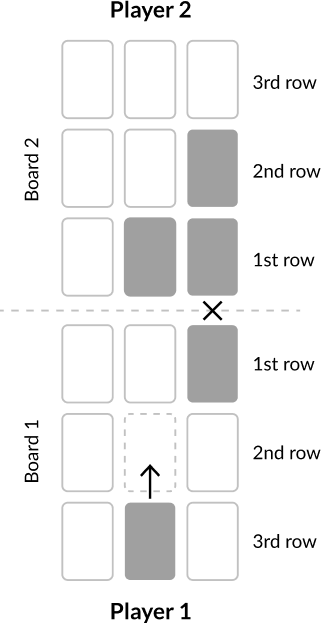
Visualization of the game board with possible card placement and actions.
But wait... when would a player actually win? Should the game end when there were no cards left on the opponent's side of the board? Or maybe when one player had no money left to buy new cards?
None of those ideas felt quite right - the game either ended too early or became too unforgiving for players in a losing position (It was really important to me that players always had a chance to make a comeback, so they stayed engaged until the very end!)
I finally came up with an idea: what if, to win the game, the damage had to be dealt directly to the player, not the cards?
If a player had a card in the front row and there wasn't an opponent's card blocking it, they could attack the opponent directly. Each player started with 10 health points (which could be increased for longer games), making positioning just as important as choosing which cards to play.
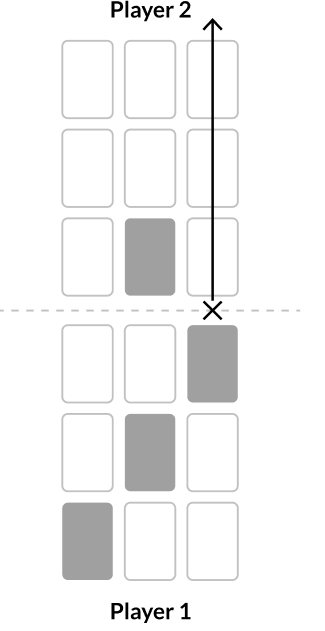
A front-row card with no blocker attacks the opponent directly.
To make the game a bit more challenging, I added a cost to each card. Players now had to spend coins to place cards on the board, forcing them to think more strategically.
But how would they earn money?
The most obvious answer was to reward players for defeating their opponent's cards. But what if someone only drew weak cards? Then they would have no way of killing a stronger opponent's cards, and the stronger player would get richer and richer. This left no way for a losing player to make a comeback.
That's when I introduced an option to sacrifice your own cards to get a coin by putting your cards from the board back into the deck.
Still money remained a recurring problem. It turned out that in later phases of the game, a lack of money slowed gameplay and prevented players from making interesting moves.
The game became boring.
I introduced two more solutions:
- I created what I called "sacrificial deck" - I split the deck into two: one with paid fighting cards and one with free cards that had no attack and only one health. At the beginning of each round, players could choose which deck to draw from.
- Added a special ability card that, as long as it stayed on the board, produced one coin each round.
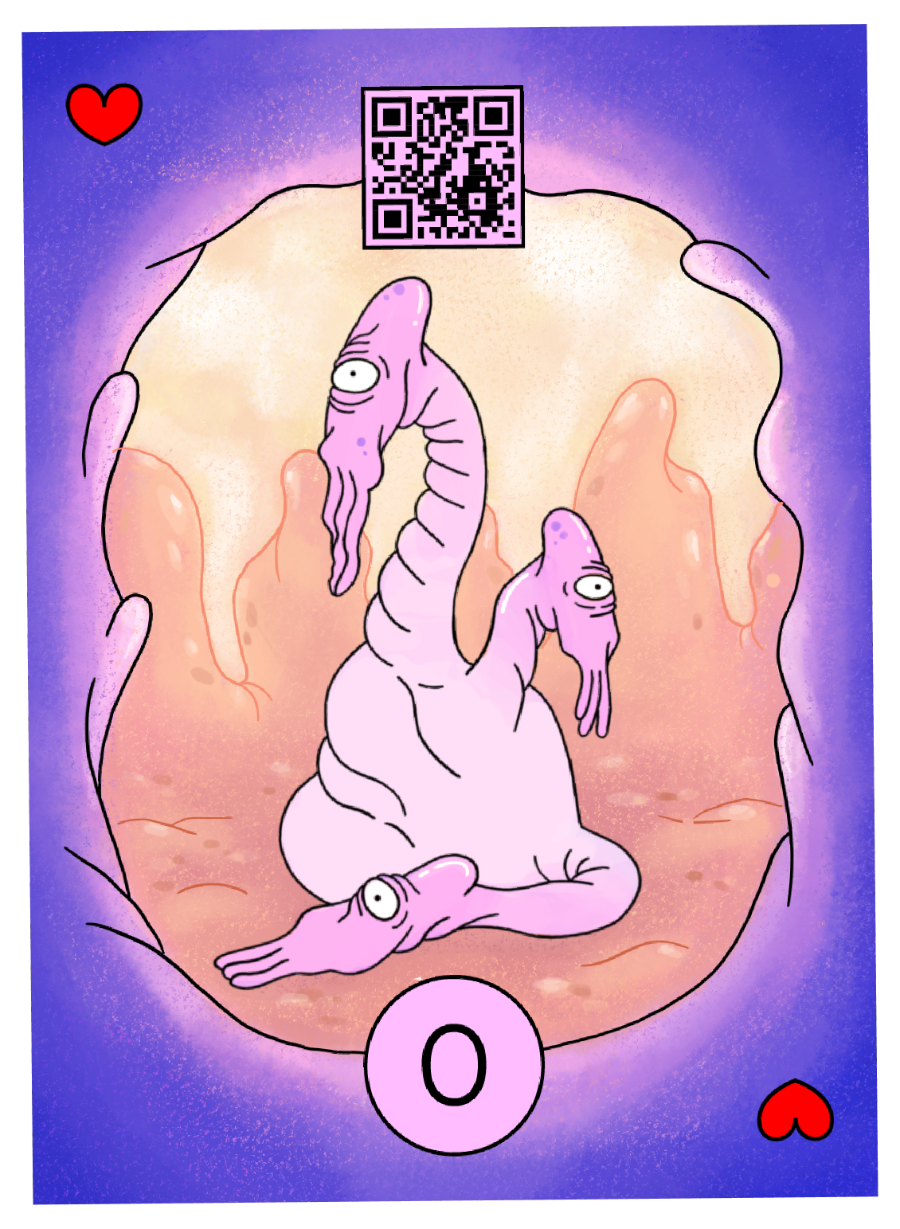
A sacrificial card - 0 attack, 1 health.
Another problem was keeping track of how much health each card had left on the board. Not all of them died instantly from being attacked, some could survive multiple attacks. This would be easy to solve in a digital game, but for a board game I didn't want players to write on cards or keep a notebook with statistics. I added small tokens instead: yellow ones for money, red ones for health. Players would place the appropriate number of tokens on each card to represent the remaining health, and keep the yellow tokens by themselves to track how much money they have.
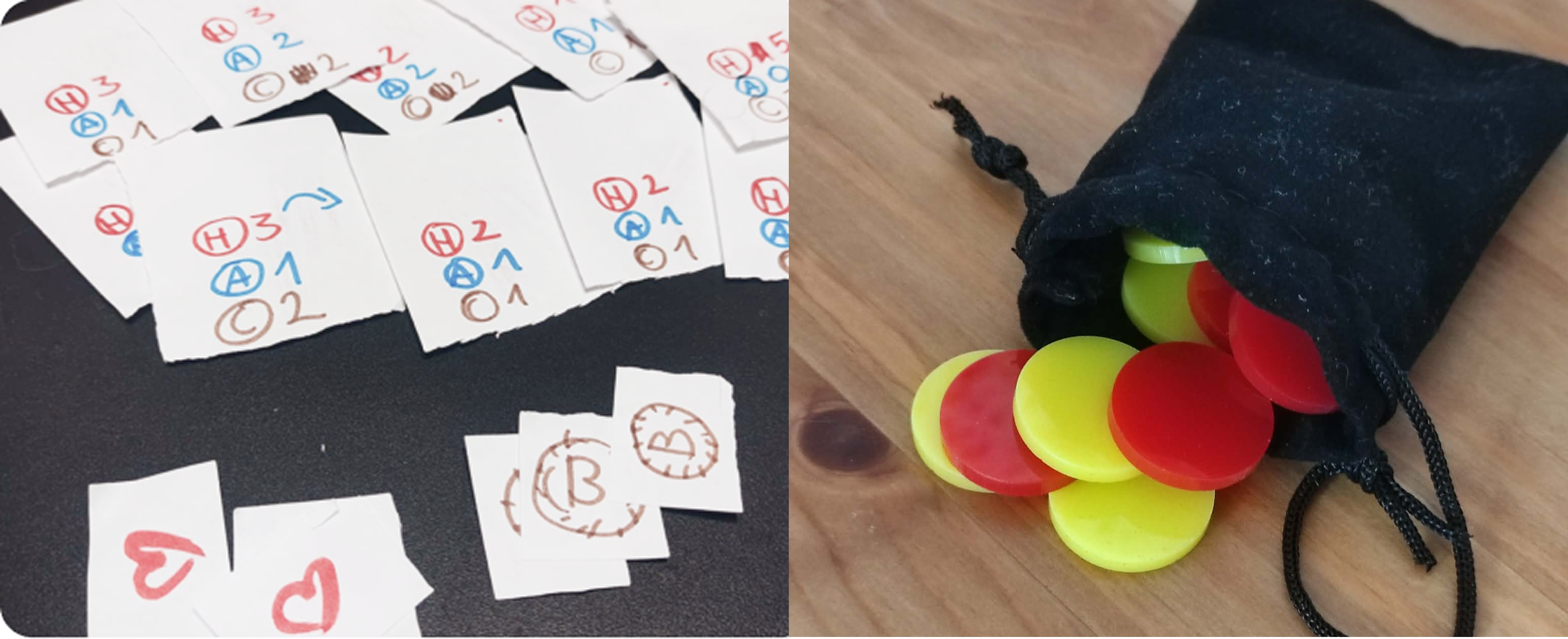
First game prototype. H, A, and C represent, respectively: Health, Attack, and Coins.
Tokens that help keep track of lives and money.
Making It Pretty
Design is the first thing to draw potential players in - without it, nobody would discover how good the gameplay is.
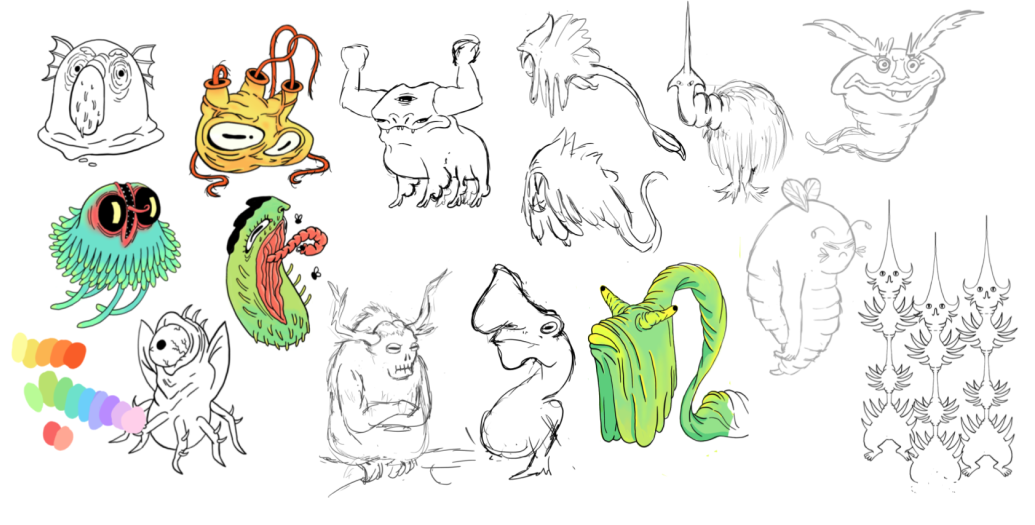
Cards' characters sketches
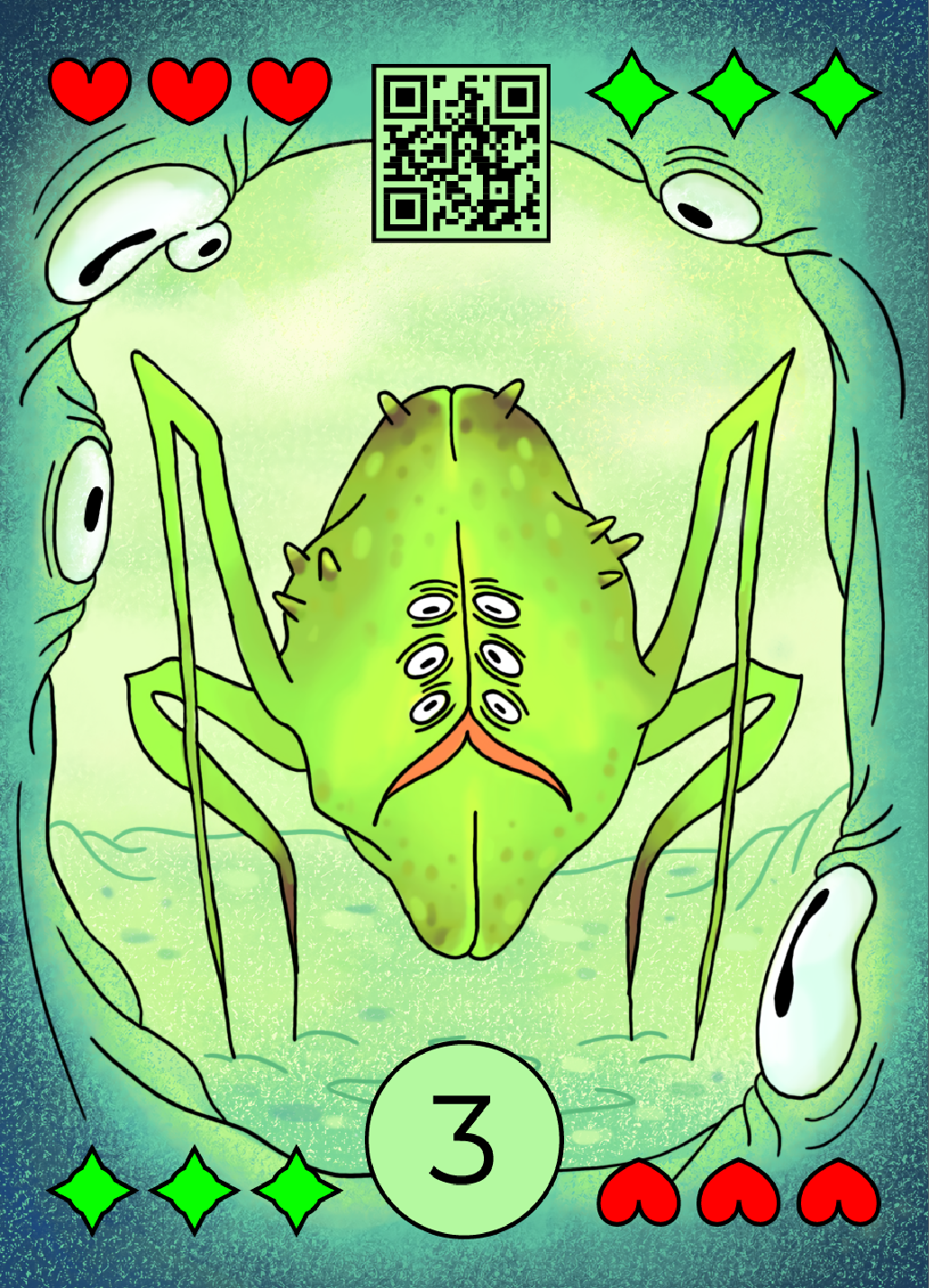
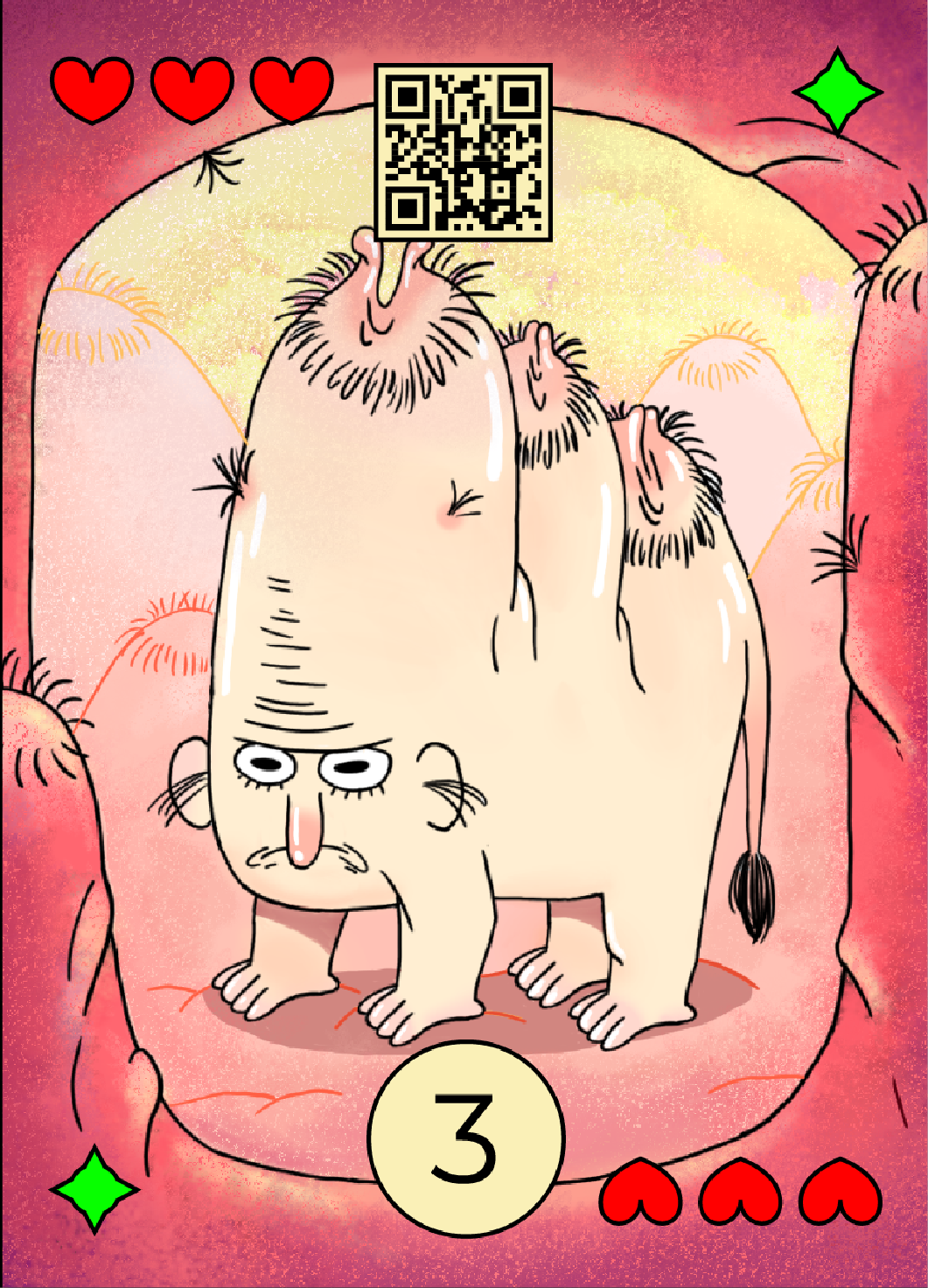
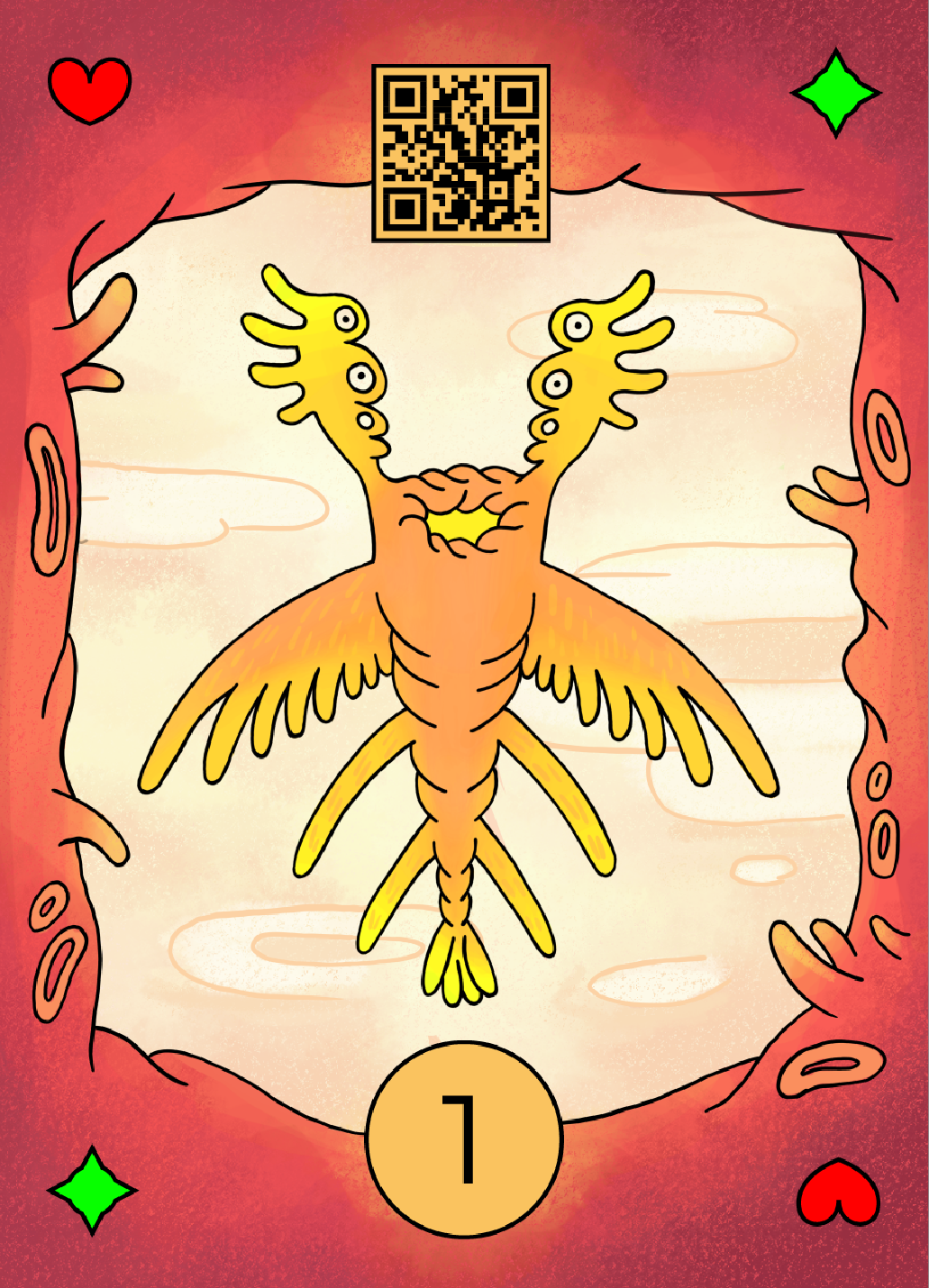
First I ambitiously planned on making 30 unique card designs with different characters, but reality got to me - it was impossible with that short timeline while studying and working a full time job. Another issue was that creating 30 unique cards would have been a waste of time, since the stats weren't unique to each card. Multiple cards shared the same stats, so using the same design actually made it easier for players to associate stats with cards. Why complicate things by making different cards with the same stats? I cut the number down to 10 unique cards, focusing on quality rather than quantity.
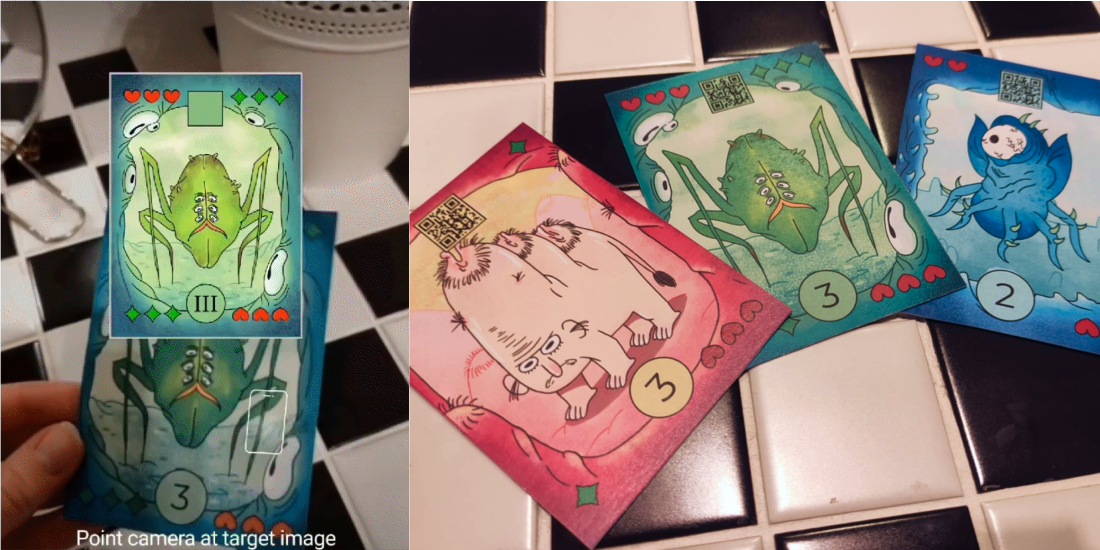
Testing - scanning a card triggers its AR animation.
Creating the Magic
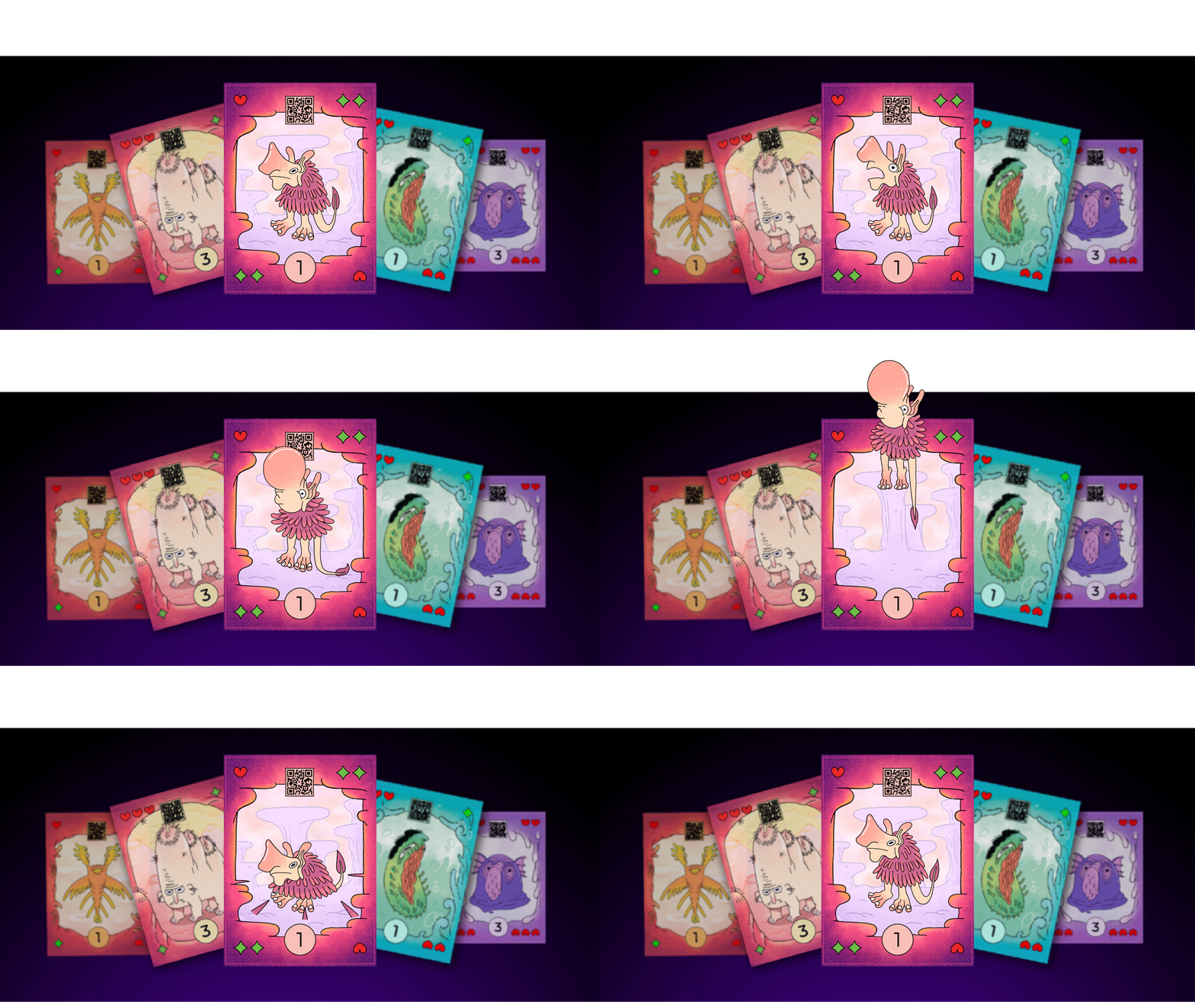
Now for my favorite part. The final step was bringing the game to life. I created the animations behind the AR experience, so scanning a card would make its character come to life right in front of the players' eyes.
Timing the movement.
Exaggerating the movements, adding or removing frames to smooth out the animation.
Clean-up + adding key elements.
Cleaning messy strokes and inbetweening
Refining the animation in After Effects.
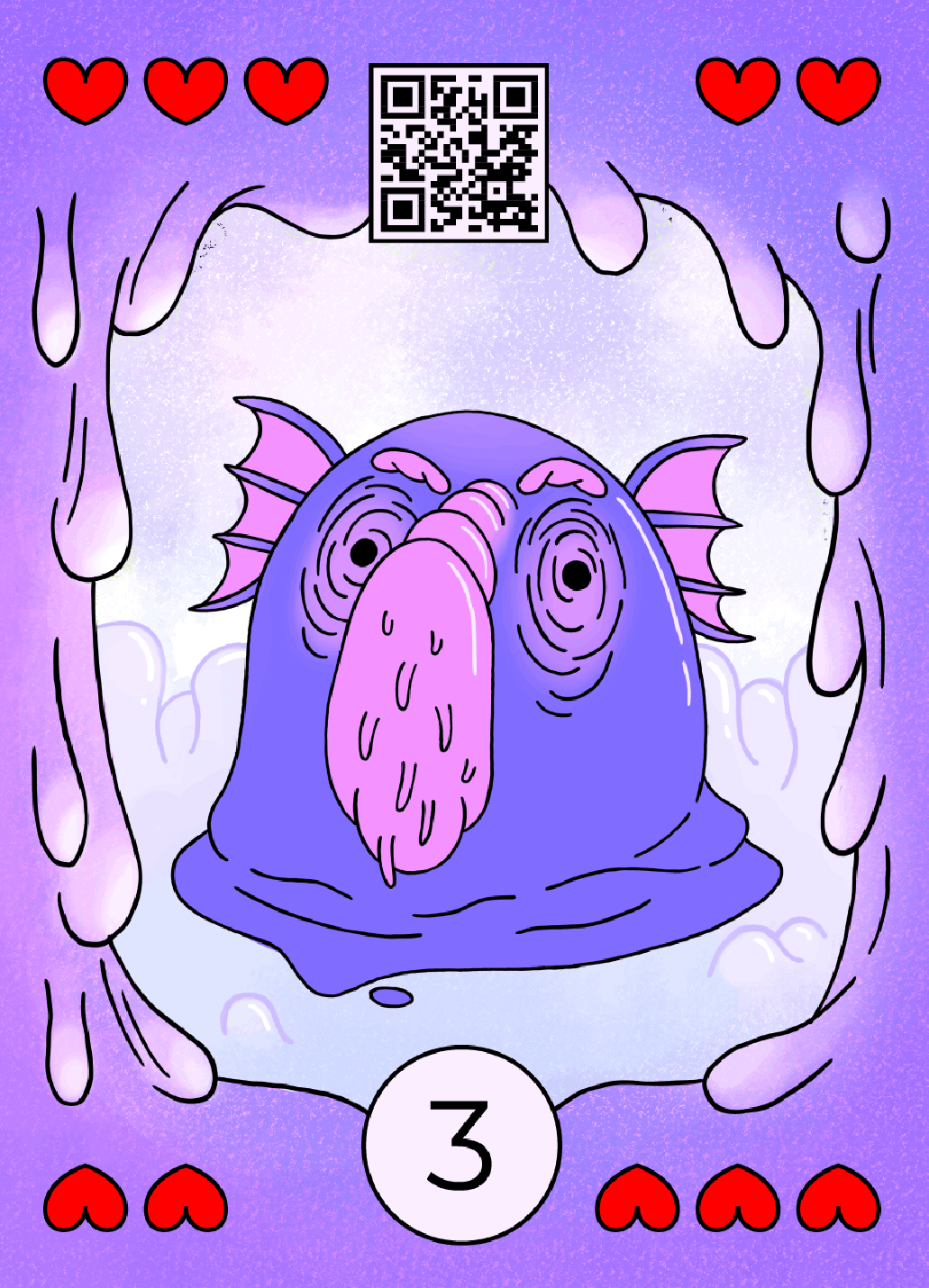
Final Card Designs
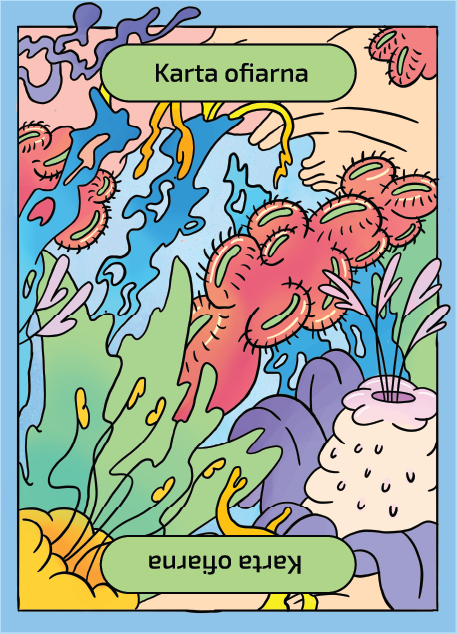
Scroll to browse, click a card to flip it over.
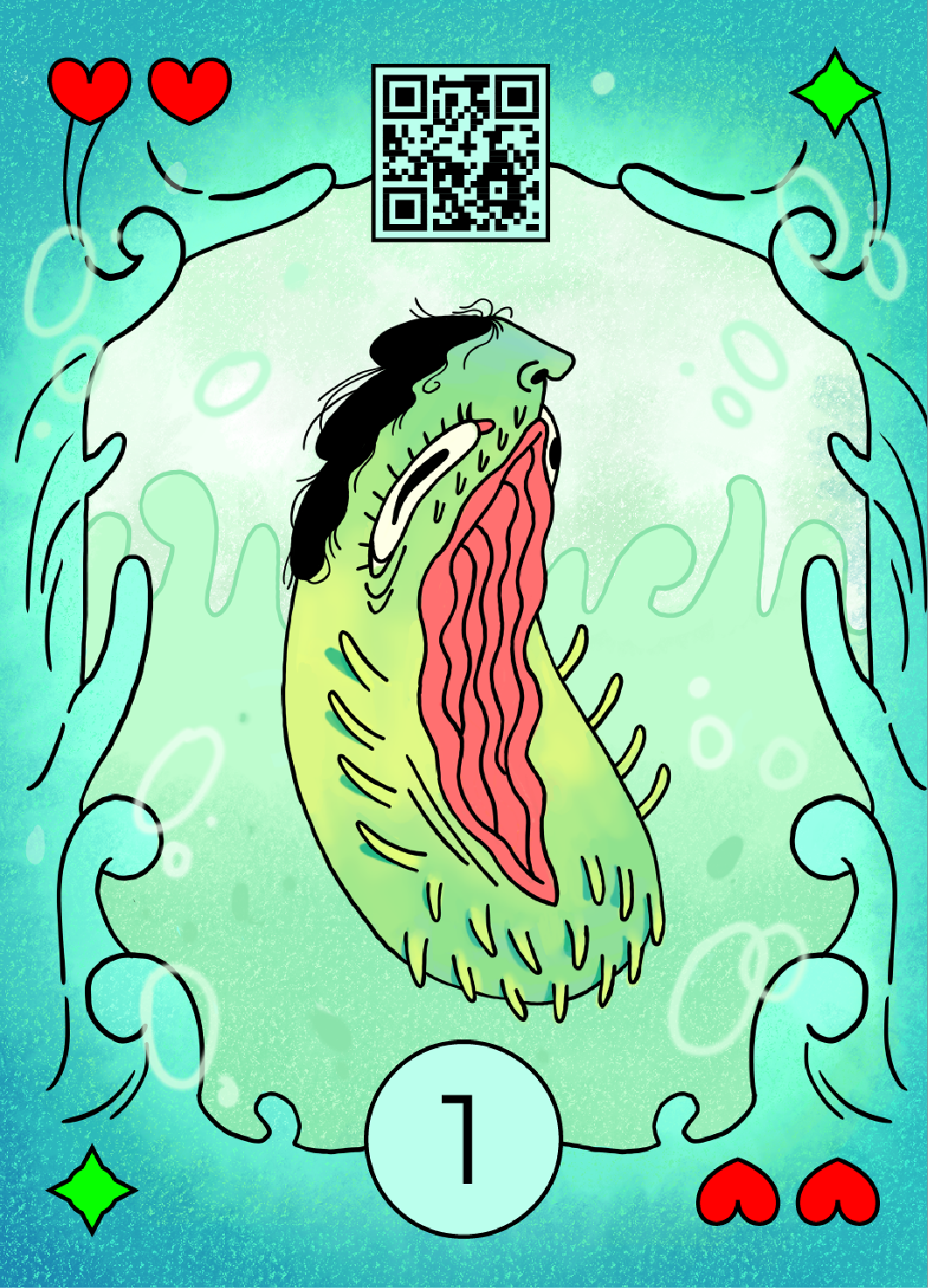
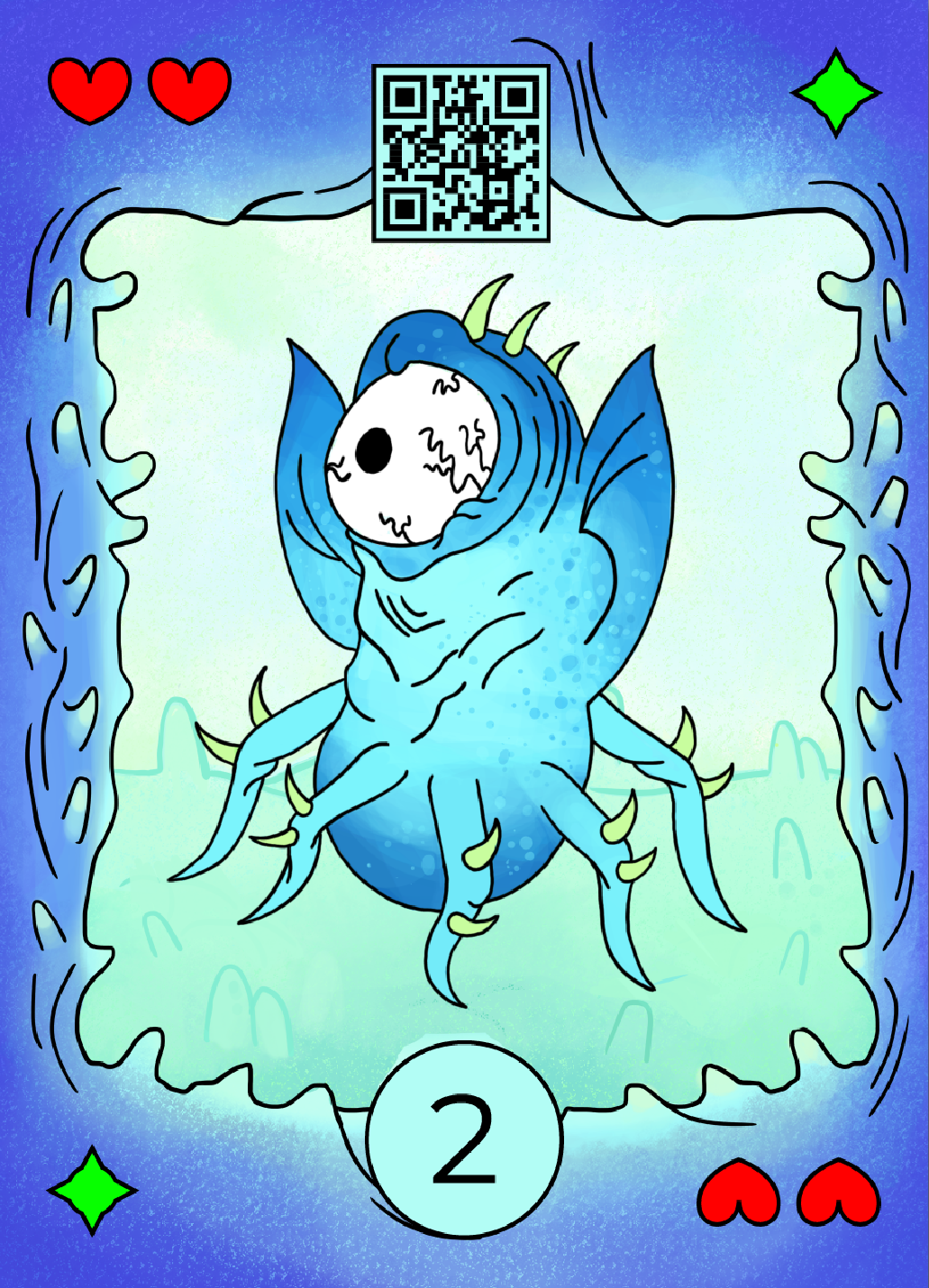
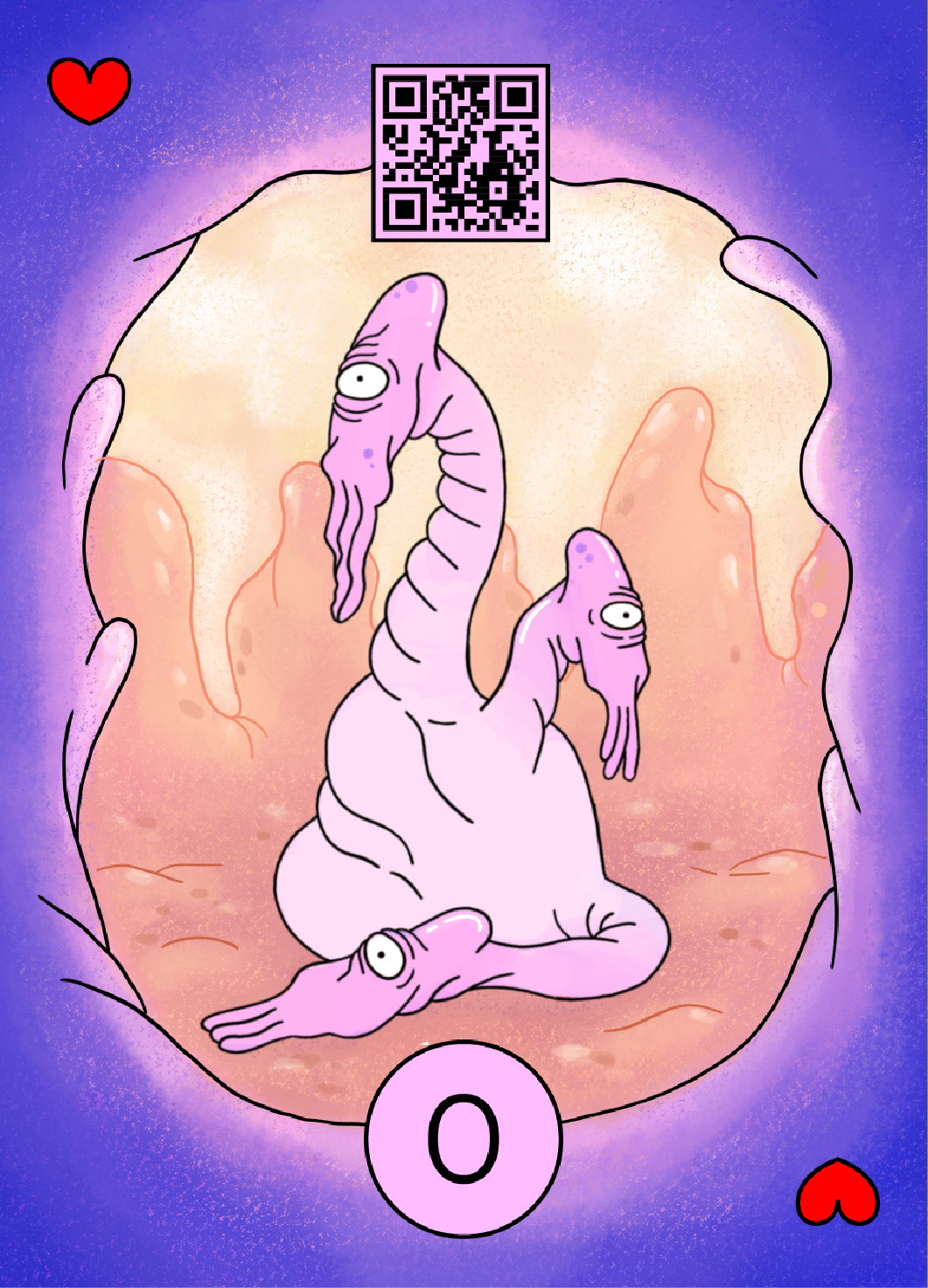
Biggest Challenges
Making engaging gameplay
The first versions of "Almost Humans" were pretty boring. You killed the opponent's card, they killed yours - that was the whole gameplay. Players were constantly short on money, so they couldn't make any interesting moves. Some rounds they were just waiting, doing nothing, trying to save up coins. There was no action, no excitement, no comebacks.
If only game mechanics can keep players this engaged, imagine what would happen with immersive design.
-d669a61f.png)
First game prototype
Making the game available for everyone
I wanted Almost Humans to be fun for experienced gamers, but not too challenging for non-players. The game needed to have no bias toward gamers - not purely skill-based, but also not purely luck-based.
Balancing card stats
In the first version of the game, the player who started the turn would always win. Another problem I encountered was that the game was too unforgiving for players in a worse position - they didn't have any way to recover (and it was really important for me to allow players in losing positions to have comebacks!).
I knew it was ready when I lost at my own game.
If you're still here, you're clearly interested.
At this point we should just talk 🤭